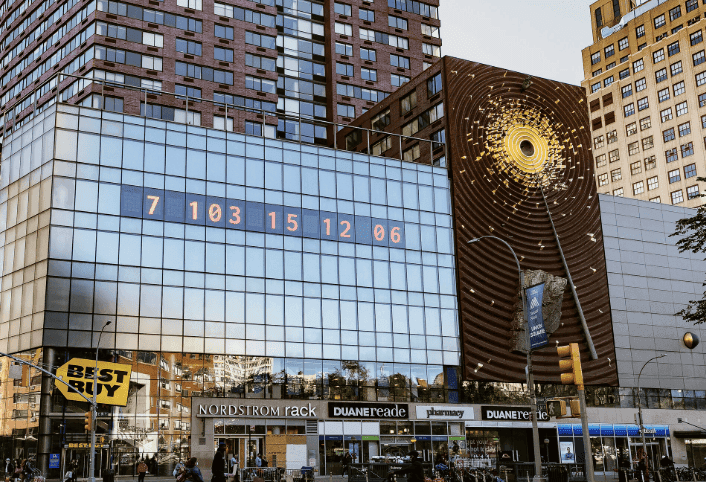
Will the Climate Clock's 1.5°C deadline change by...?
Amount
Buy
Each outcome asks whether “Will the Climate Clock's 1.5°C deadline change?” is satisfied by a different deadline, allowing expectations to be compared across shorter and longer time windows.
The available deadlines are December 31, 2026 and March 31, 2027.
Each deadline uses the exact qualifying event, source, cutoff time, and time-zone rules documented in the Resolution Rules below.
Each market asks whether the “Deadline” to limit global warming to 1.5°C shown by the Climate Clock (https://climateclock.world) will change before that market's listed date.
A market resolves to “Yes” if, at any point on or before its listed date, 11:59 PM ET, the Climate Clock's published 1.5°C Deadline is more than 30 days earlier or more than 30 days later than July 22, 2029. Otherwise, that market resolves to “No”.
The Climate Clock's 1.5°C Deadline is published as a machine-readable timestamp in its public data feed at https://api.climateclock.world/v2/clock.json (the “timestamp” value of the carbon-deadline module), which is the same target the on-site countdown at https://climateclock.world displays. As of this market's creation, that Deadline is July 22, 2029 (timestamp 2029-07-22T16:00:00+00:00). The ordinary second-by-second ticking of the countdown toward the Deadline does not constitute a change; only a change to the published Deadline date itself qualifies.
Because a qualifying change is permanent once published, every market with a listed date on or after the change will resolve “Yes”, and markets whose listed date has already passed without a qualifying change will have resolved “No”. If the Climate Clock and its public data feed both become permanently unavailable before a qualifying change is published, all unresolved markets will resolve to “No”.